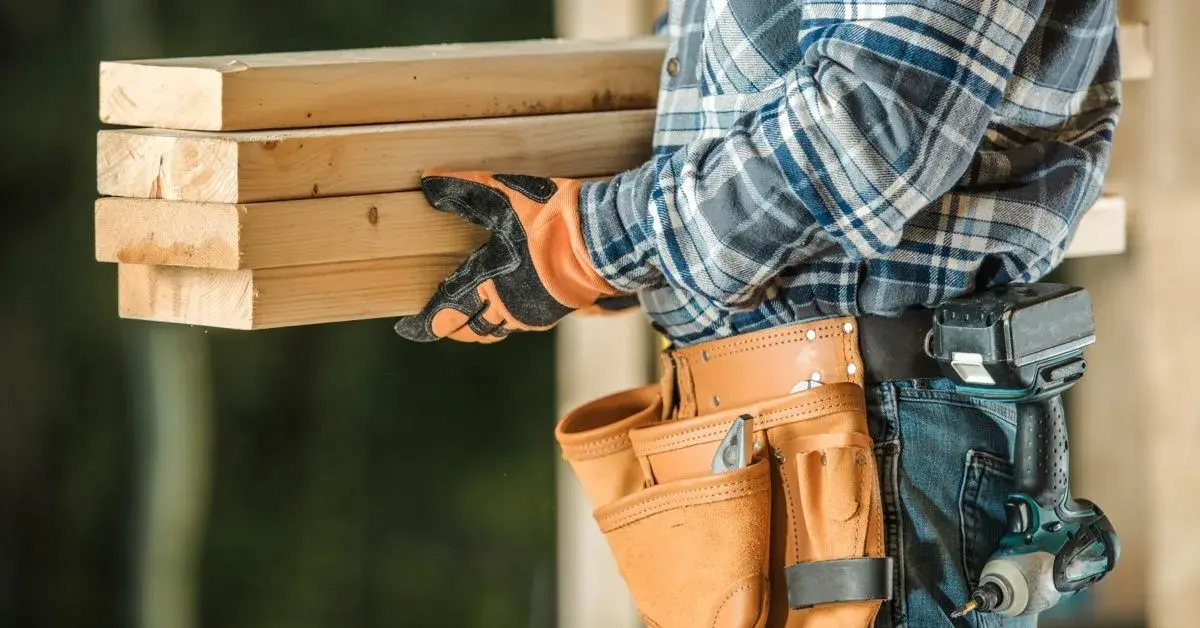
Most carpentry contractors looking for insurance start with the same assumption: Get carpentry liability insurance, show proof to the GC or customer, and get to work. However, the problem is that “liability insurance” means different things depending on what you actually do. A solo finish carpenter doing interior trim, a framing contractor working at height, and a remodeler hauling tools from job to job don’t all face the same risks. As a result, they don’t all need the same coverage.
Many contractors know they need something but aren’t sure what belongs in the policy, what’s optional, or how to describe their work so the coverage actually fits. In this article, we will walk you through these areas of concern in simple terms so that you can understand what kinds of insurance a carpentry contractor typically needs, where general liability fits, and when it makes sense to talk with a local PA or MD independent agent about broader contractor coverage.
Carpentry Liability Insurance Is Usually a Starting Point, Not the Whole Plan
But a carpentry business carries more than one kind of risk. You might work inside finished homes; carry miter saws, table saws, nail guns, compressors, ladders and portable dust collection equipment; drive a truck or van every day; hire employees; store sheet goods or trim packages or work under contracts that require proof of insurance before you can unload tools. A basic liability policy, while important, doesn’t cover all of that.
A more useful way to think about carpenter insurance is to match coverage to your actual exposures. Ask yourself the following questions: What could go wrong with the way I work specifically, and which coverage is built for that situation? Shopping by label alone can leave gaps you won’t notice until there’s a problem.
Note: Insurance requirements can also vary by state, licensing or registration category, jobsite, municipality and contract. Workers’ compensation is generally a key issue when a contractor has employees, while general liability requirements often depend on the type of work and who is hiring the contractor.
The Main Types of Insurance a Carpentry Contractor May Need
Most carpentry contractors should understand the major coverage categories first. Some will be essential, while others depend on whether you have employees, own vehicles, store equipment, fabricate off-site, or take on installation-heavy jobs.
| Coverage Type | What It Generally Helps Address | When It Becomes Especially Important |
| General Liability | Third-party injury or property damage claims connected to your business operations | when you work at customer homes, commercial sites or jobs controlled by a GC |
| Workers' Compensation | Work-related employee injuries or illness, subject to policy terms and state requirements | When you have employees or need to satisfy job or contract requirements |
| Commercial Auto | Vehicle used for business driving | When you use trucks, vans, or trailers to visit jobs, haul tools, or transport materials |
| Tools and Equipment Coverage | Tools and equipment that move from place to place | When you work depends on tools kept in vehicles, trailers, shops, or job sites |
| Commercial Property | Business-owned buildings, contents, or property at a fixed location | When you own or lease a shop, office, storage space, or yard |
| Contractors' E&O or Professional Liability | Claims tied to certain professional mistakes or faulty work allegations, depending on the policy | When your advice, plans, specifications, or workmanship could lead to dispute |
| Installation Floater or Inland Marine Coverage | Materials, supplies, or property in transit or awaiting installation | When you transport cabinets, millworker, doors, windows, or finish materials before they become part of the job |
These coverages overlap in the way contractors talk about them but not in the way policies are actually built. “My stuff is covered” could mean tools, stock, installed materials, leased shop contents, or property in transit are indeed covered, but these aren’t always handled by the same form. To avoid gaps in coverage, a contractor who stores custom cabinets overnight in a trailer needs to describe that exact situation to an agent, not just say, “I need carpenter insurance.”
A local independent agent can help connect the dots between the work you perform and the coverages available through Pennsylvania & Maryland specific business insurance for contractors.
Where General Liability Fits and Where It Doesn’t
General liability is often the first coverage carpenters ask about because it deals with a big concern: What happens if someone outside your business claims they were hurt or their property was damaged because of your work?
For example, imagine you’re installing built-ins in a customer’s home and a stack of trim slides and damages flooring or a visitor trips over an extension cord, air hose, or cut-off pile near your work area. These are the kinds of scenarios that make contractor liability coverage important. Exact coverage depends on the policy, but the basic purpose is to help protect the business from certain third-party claims.
What it doesn’t cover is just as worth knowing.
General liability isn’t a substitute for workers’ compensation if an employee gets hurt using a circular saw or lifting sheet goods. It doesn’t automatically cover your vehicle exposure if you’re using a pickup, van, or dump trailer for business. It may not protect tools stolen from a locked truck overnight, and it likely won’t resolve every workmanship dispute on its own.
Many buying mistakes start here. A contractor hears “liability” and assumes it means “anything bad connected to my business.” This assumption can quickly fail when a claim involves your own tools, your own crew, your own vehicle, or your own stored materials.
Broader market data backs this up. The 2025 Global Construction Insurance and Surety Market Report from Aon separates construction property, professional liability, casualty, and surety into distinct market segments. Different problems get handled by different policies, and knowing which is which matters before you buy.
Your Carpentry Work Should Shape Your Coverage
Two carpenters can share the same job title and have very different insurance needs. The type of work, where it’s done, what you bring with you, who helps you, and what customers or GCs require all factor in.
Finish carpentry and interior work
Finish carpenters often work inside occupied homes or finished commercial spaces around walls, floors, cabinets, trim, fixtures, countertops, and customer property. General liability is important here, but so is an accurate description of the kind of work you perform.
If your materials are delivered directly to the job and installed immediately, your property exposure looks different than a contractor who stores materials in a shop for a week, moves them to a trailer, and then takes them to the site. This is the same trade, but the insurance conversation is very different.
Framing, remodeling and jobsite carpentry
Framing and remodeling work often involves open jobsites, multiple trades, ladders, scaffolding, roof edges, temporary power, subcontractors, and changing site conditions. If you have employees, workers’ compensation is a key topic to address. If you use trucks, trailers, or vans, commercial auto needs a look too.
Contract language matters more than most contractors realize. Many GCs require a certificate of insurance (COI) before you step on site. If you’re scrambling for a COI the morning of mobilization, you can hold up the whole project and start off on the wrong foot with the GC before you’ve made a single cut.
Shop-based woodworking or installation-heavy work
Some carpenters do woodworking, cabinetry, or shop fabrication. Others buy materials, transport them, and install later. These operations raise property, content, equipment, and installation-related questions. Some insurers call this "carpenter insurance," while others use "woodworking insurance" or "joiner insurance.”
If you’re not sure how your operation fits, guessing from a dropdown menu won’t help you in the long run. A conversation with an agent will bring clarity and set you up with the coverage you actually need.

Why Business Classification Matters More Than Many Contractors Realize
One frustration that comes up in contractor insurance discussions is pretty basic: “What should I even call my business?” Some contractors do trim, decks, repairs, remodeling, cabinets, punch-list work, and light handyman jobs, and a generic application often doesn't have a specific checkbox for that mix.
The bottom line is that insurance is built around the work being insured. A vague or inaccurate business description can create confusion about what the policy covers and makes it harder for an agent or carrier to understand your actual risk.
Be ready to explain:
-
Whether you do residential, commercial, or both
-
The type of carpentry work you perform most often
-
Whether you work at height or on structural framing
-
Whether you perform remodeling or repair work beyond carpentry
-
Whether you hire employees or subcontract work to others
-
What vehicles, trailers, tools, and equipment you use
-
Whether GCs or customers ask you for proof of insurance
-
Whether you store materials off-site before installation
Worth Noting: “Handyman” versus “carpenter” isn’t just a wording choice. If your work spans several trades, structural repairs, or activity outside straightforward finish carpentry, that can change the coverage conversation. Don’t simplify your work to get through an application faster.
How Cost Is Usually Determined
It’s natural to ask how much carpenter insurance costs. It depends because carpentry businesses vary. A solo trim carpenter, a remodeling contractor with employees, and a framing crew with multiple vehicles create different exposures and, as a result, different premiums.
Factors that typically affect cost include the following:
-
The type of carpentry work
-
Business size
-
Payroll
-
Vehicle use
-
Claims history
-
Tools and equipment
-
Coverage selections and limits
-
Job requirements
Some contractors also compare temporary coverage against annual policies.
Sometimes, the cheapest option makes sense for a one-off need. But if your work expands mid-year, a customer adds requirements, or you start taking more regular jobs without revisiting your coverage, a short-term policy can leave you exposed at the worst possible time.
How to Compare Carpenter Insurance Options
It’s easy to compare insurance by price, discount language, online reviews, or how fast an application moves. These things matter, but they don’t tell the whole story. As we’ve shown for a carpentry contractor, coverage fit matters most.
When comparing options, look at:
-
Coverage match: Does the policy fit the actual carpentry work you perform?
-
Exclusions and limitations: Are there types of work, jobsite conditions or operations that need extra attention?
-
Vehicle use: Are business driving exposures addressed through appropriate commercial auto insurance options?
-
Employee exposure: If you have workers, have you discussed workers’ compensation coverage?
-
Tools and materials: Are the things you depend on every day protected in the right way?
-
Proof of insurance: Can you get COIs when jobs require them?
-
Claims support: Do you understand how to report a claim and who to call?
-
Billing simplicity: Can multiple business coverages be coordinated in a way that is easier to manage?
Common Mistakes to Avoid
Most insurance mistakes start with assumptions. The contractor assumes a personal auto policy covers work driving, assumes tools are covered automatically, or assumes “handyman” and “carpenter” mean the same thing to every insurer.
Watch out for these common mistakes that cause issues down the road:
-
Buying only general liability without reviewing the rest of the business. General liability is important, but it doesn’t always cover employees, autos, tools, or property on its own.
-
Describing the business too broadly. “Carpentry” covers a lot of ground. Be specific about the work you actually do.
-
Choosing based only on price. A lower premium doesn’t help if the coverage doesn’t match the job.
-
Ignoring subcontractor or GC requirements. Know what proof of insurance you need before the project starts.
-
Forgetting about tools and equipment. If your tools are how you make your living, ask specifically how they’re protected.
-
Not asking about claims until something happens. Before you buy, understand who you contact and what information you’ll need.
Why a Local Independent Agent Can Help in Pennsylvania and Maryland
If you work in Pennsylvania or Maryland, you don’t have to sort this out on your own. MBG works through local independent insurance agents who can look at your operation, explain your options, and match coverage to the way your carpentry business actually works.
This kind of guidance is especially useful when your business doesn’t fit a simple online category from a dropdown menu.
MBG also offers contractor-focused business insurance in Pennsylvania and Maryland, including package solutions that can bring together liability, property, business auto, and workers’ compensation where appropriate. For eligible contractor packages, MBG’s Contractor’s Tailored Coverage endorsement is automatically included. Coordinating coverages makes billing simpler when you have one invoice instead of separate policies in separate places.
Talk Through Your Carpentry Coverage with a Local Agent
Asking about carpentry liability insurance is an important place to start, but it shouldn’t be the only question you ask. What mix of coverage fits your work, your tools, your vehicles, your employees, and the jobs you want to win?
If you’re a carpentry contractor in Pennsylvania or Maryland, an independent MBG agent can help you work through these questions in plain terms.
To explore your options, find an independent MBG agent near you or learn more about our contractors insurance.