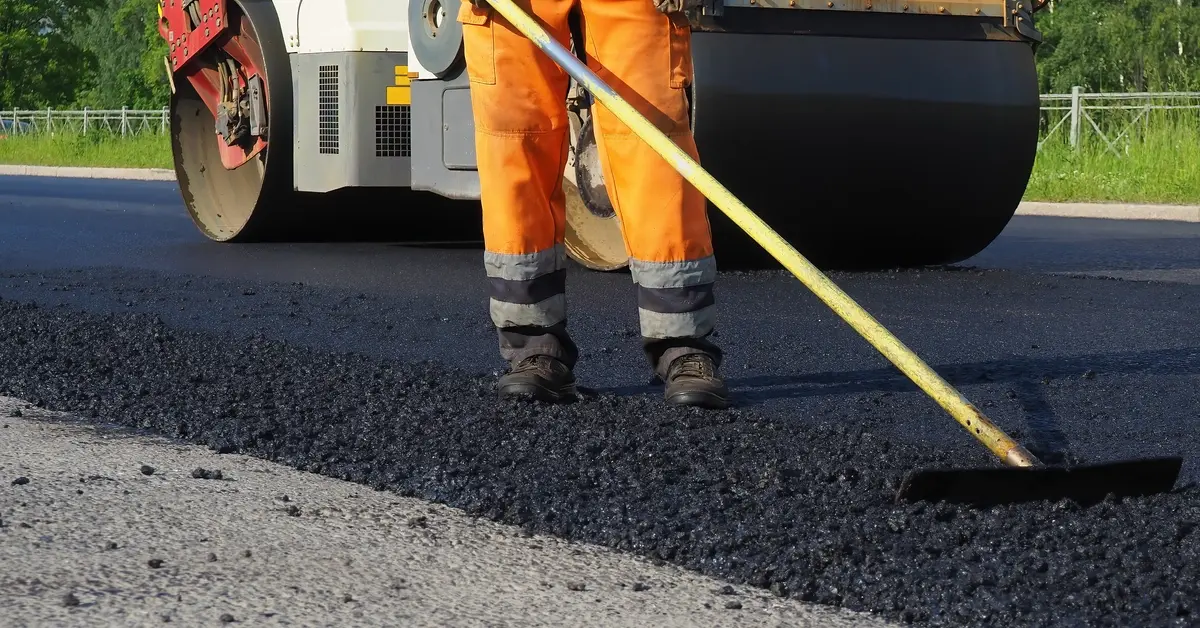
A paving job can go sideways in more ways than one. A dump truck gets into an accident on the way to the site. A roller, saw or plate compactor disappears from a jobsite overnight. A customer says your crew damaged a garage apron, retaining wall, sprinkler line or landscape feature and wants your insurance information right away.
For asphalt and paving contractors, the real question isn’t whether you carry insurance — it’s whether your coverage is designed for the risks and demands of your day-to-day operations.
Paving contractors frequently operate with employees, vehicles, trailers, mobile equipment, subcontractors, rented machinery and work areas close to customer property. For this reason, general liability insurance is essential, but it's only one piece of a larger insurance program with coverages built in response to common work exposures.
Our goal in this guide is to walk you through the types of insurance paving contractors commonly review, where coverage gaps can happen and how to prepare for a conversation with a local independent agent.
What Is Paving Contractor Insurance?
Paving contractor insurance is not one single policy that protects your business from every possible problem. Instead, it usually refers to a group of commercial insurance coverages that work together to protect different parts of your operation.
A customer property damage claim is different from an employee injury, just like a stolen piece of equipment is different from a crash involving one of your trucks. What’s more, a building fire at your shop is different from damage to tools stored at a jobsite.
Each situation may involve a different part of your insurance program with different coverages and limits.
As a result, many paving businesses need to look beyond a generic contractor policy. Your company may work with hot asphalt, milling equipment, rollers, skid steers, dump trucks, trailers, rented equipment, subcontractors, commercial lots, residential driveways, municipal projects or a mix of all of the above, making your coverage needs unique to your business.
If you are reviewing business insurance for a paving company, the goal is to build coverage around the work you actually do, not around a broad contractor label.
The Type of Paving Work You Do Shapes the Coverage You Need
Not every paving contractor has the same risk profile. After all, a company that focuses on residential driveways may have different exposures than a contractor that handles commercial parking lots, roadwork, milling, grading, sealcoating or subcontracted site preparation.
Your coverage should reflect your paving operations, including any of the following:
-
Residential driveway paving and repair
-
Commercial parking lots
-
Road paving or road repair
-
Sealcoating
-
Patching, resurfacing or milling
-
Site work near curbs, utilities, sidewalks, structures, catch basins or landscaping
-
Subcontractor work for a general contractor, municipality or property manager
-
Equipment hauling between yards, suppliers, plants and jobsites
The broader your operation, the more important it is to avoid assumptions. If your insurance was written when you only handled small residential jobs, but now you are bidding larger commercial lots or municipal work, it may be time for a fresh review.
Commonly, coverage gaps appear when the business changes while the policy stays the same. Adding milling, grading, trucking, subcontracted site prep or larger commercial contracts can change your exposure even if the business still looks like “paving” on paper.
For a closer look at contractor-specific coverage information, you can review MBG’s contractors insurance resources.
Paving Contractor Insurance Coverage at a Glance
Most asphalt contractor insurance reviews start with the same core categories: liability, employees, vehicles, property and equipment.
| Coverage | What It Helps Protect | Why It Matters for Paving Businesses |
| General Liability | Third-party injury or property damage claims | A customer, pedestrian, property owner or other third party may claim your work or jobsite activity caused damage or injury. |
| Workers' Compensation | Employee work-related injuries or illnesses | Paving crews work around equipment, hot mix, vehicles, traffic, tools, uneven surfaces and physically demanding conditions. |
| Commercial Auto | Business-use vehicles and auto liability exposures | Dump trucks, pickups and other business vehicles may travel between yards, plants, suppliers, and jobsites. |
| Equipment/ Inland Marine | Mobile tools and equipment | Pavers, rollers, skid steers, saws, compactors and other equipment often move from site to site or sit away from your main location. |
| Commercial Property | Buildings, business personal property and fixed locations | Your office, shop, garage, storage yard structures or fixed business property may need protection separate from mobile equipment. |
As the above table shows, general liability may be essential for your business, but it's not a substitute for commercial auto. Likewise, property insurance may help with a building or business contents, but mobile equipment may need a different solution.
Understanding policy names is only the starting point. Many factors can affect how a loss or claim is handled: ownership, storage location, equipment schedules, vehicle use, subcontractor use, job type and contract requirements.
General Liability Insurance for Paving Contractors
General liability insurance is one of the first coverages paving contractors usually ask about. This coverage is designed to help with certain third-party bodily injury and property damage claims.
For a paving business, this could include a property owner claiming your crew damaged a nearby structure, a visitor tripping near the work area or a customer alleging your operations caused damage during the job.
General liability matters because paving work often happens close to property, people, vehicles, curbs, sidewalks, garage slabs, drainage structures, landscaping and other improvements. When heavy equipment, hot materials, traffic control and changing site conditions are added to the mix, exposure can quickly escalate.
But it’s important to recognize that general liability has limits. It's not workers’ compensation or commercial auto and may not protect your own tools or equipment. Every workmanship or contract dispute, as well, may not be resolved by general liability. Other coverages exist to fill in these gaps.
One practical step many contractors overlook when filling in insurance gaps is jobsite documentation. Before-and-after photos, signed work orders, notes about pre-existing damage and a clear site walk-through process will not replace insurance, but they can help support your side of a claim if a dispute arises and allow your coverage to do its job.
Workers’ Compensation for Paving Crews
If your business has employees, workers’ compensation is one of the most important coverages to discuss with your agent.
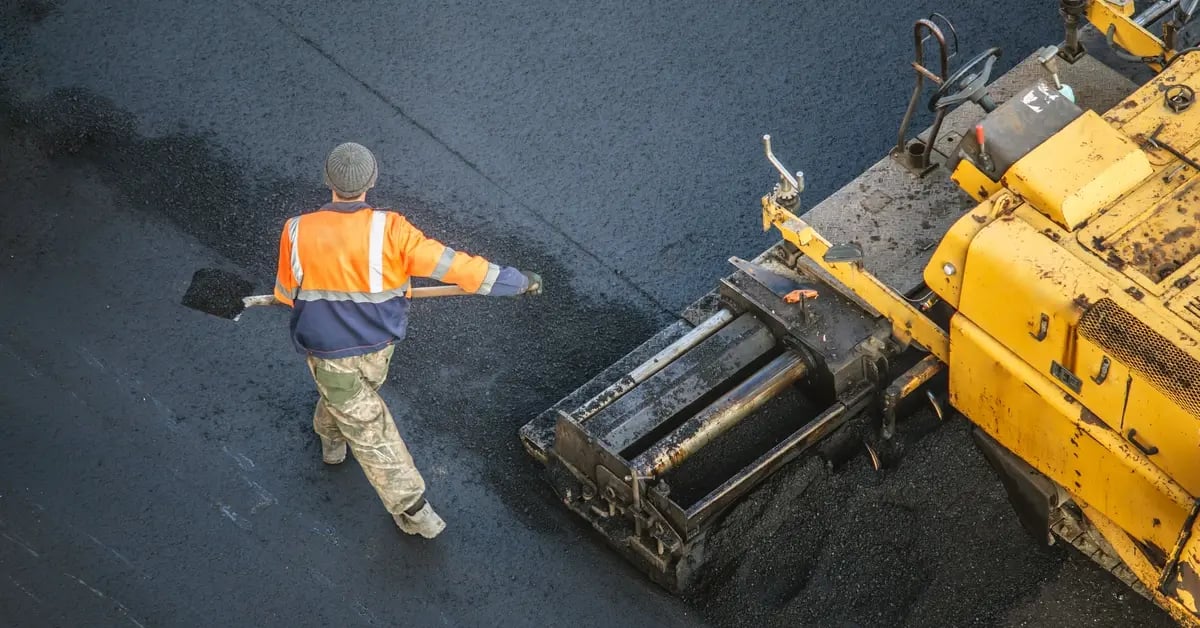
Paving crews do physical work in active environments around hot asphalt, compactors, rollers, saws, trucks, trailers, traffic, uneven ground and changing weather conditions. When an employee suffers a work-related injury or illness, workers’ compensation may be the coverage that comes into play.
From a business continuity standpoint, this coverage is essential. If a crew member is hurt, you need a process that supports the employee and helps the business handle the claim properly. Beyond that, proof of workers’ compensation may also be expected by general contractors, property managers, municipalities or other hiring parties.
If a worker’s role changes from light shop work to field paving or your company starts handling work that was previously subcontracted out, your insurance review should reflect that. Take time to keep payroll, job duties and crew roles current with your agent.
If your business relies on subcontractors, be sure to also talk through that setup clearly with your agent. “I use subs” is not the same as “I have no worker exposure.” Their insurance, your contracts and how their work fits into your projects can all play a role in determining the right coverage.
Commercial Auto Coverage for Trucks and Business Vehicles
Paving companies are often vehicle-heavy businesses. Even a smaller operation may depend on pickups, dump trucks, trailers, or other vehicles to move people, tools, materials, and equipment to and from the jobsite.
It’s important to note that business vehicle accidents typically fall outside the scope of general liability coverage. If one of your trucks is involved in an accident while being used for business, the commercial auto portion of your insurance program may be the coverage that matters most.
Also, the vehicle exposures created by paving operations often extend beyond what personal auto policies are designed to cover. If a truck is titled to the business, driven by employees, used to haul materials or regularly used to support paving work, it deserves a commercial insurance conversation with your agent.
Beyond common business use, usage worth discussing with your insurance agent might include:
-
A personally owned pickup used to visit jobsites
-
A newly purchased truck not yet discussed with the agent
-
A rented truck used during a busy season
-
Employees using their own vehicles for work errands
-
Trailers or equipment haulers used between jobsites
-
Vehicles used across state lines or for longer-distance hauling
When reviewing commercial auto, be ready to discuss who drives, which vehicles are used, how they are used, where they travel and whether you use hired or non-owned vehicles in the course of business.
Equipment, Tools and Inland Marine Coverage
Your equipment may be one of the largest investments in your paving business, and it’s also one of the easiest areas to misunderstand when considering coverage.
Commercial property coverage may help protect business property at a fixed location, such as an office, shop or garage. But, as every paving contractor knows, tools and equipment often move. They may be hauled to jobsites, stored off site, left temporarily at a project location or transported between locations.
This is why inland marine or equipment coverage is often part of the conversation for paving businesses. MBG’s specialty insurance resources include optional coverages, such as inland marine, equipment breakdown and employment-related practices liability, that may help round out a commercial insurance program.
Let’s consider the difference between these two situations:
| Situation | Why the Distinction Matters |
| A fire damages business contents stored inside your shop. | This may involve commercial property coverage, depending on the policy. |
| A plate compactor, saw, roller or other equipment is stolen from a jobsite overnight. | This may involve equipment or inland marine coverage, depending on how the policy is written. |
A common assumption that opens your business to gaps is that your building or property policy automatically covers every tool or machine your crew uses in the field.
Before you talk with an agent, prepare a current equipment list. Be as detailed as you can by including item descriptions, available serial numbers, ownership status, storage location, whether the equipment moves between jobsites and whether any equipment is leased, rented, borrowed or newly purchased.
Other Coverages Worth Discussing
Once the core coverages are in place, some paving contractors may need additional protection depending on how they operate, who they work for and what contracts require.
These are not just boxes to check but are key coverage considerations to review with your insurance agent.
| Coverage | When It May Be Worth Discussing |
| Umbrella Liability | When larger contracts, higher limits or broader liability protection are part of the conversation. |
| Contractors Pollution Liability | When work creates environmental exposure or a contract specifically requires it. |
| Crime Coverage | When theft, dishonesty or similar business risks are a concern. |
| Employment Practices Liability | When the business has employees and wants to discuss claims related to employment practices. |
| Cyber Liability | When the business stores customer information, uses digital billing, dispatch software, email invoicing or connected office systems. |
For a more in-depth explanation of commercial coverage categories, see MBG’s guide to what commercial insurance is.
Coverage Gaps Paving Contractors Often Miss
The biggest insurance problems often start with what seem like reasonable assumptions. A business owner has a policy, sees the word “contractor” and assumes the major risks are handled.
This is not always the case.
“My contractor policy covers everything.”
Contractor insurance is usually more like a toolbox than a single tool. General liability, commercial auto, workers’ compensation, property and equipment coverage each do different jobs.
If a customer claims property damage, general liability may be involved — but if an employee is injured, that points toward workers’ compensation. Likewise, if a truck is in a crash, commercial auto may be central to the solution. In turn, equipment coverage may play a role if equipment is stolen from a jobsite.
“Contract language means I don’t need to worry.”
Contracts matter, but they don’t replace insurance. A disclaimer in an estimate may help set expectations, but a dispute could still arise after the fact.
If your work involves excavation, grading, milling, drainage, utilities, irrigation, cables, curbs, sidewalks or customer property close to the work area, discuss these exposures with your agent before the job starts.
“Equipment and vehicles are basically the same thing.”
They are not always treated the same for insurance purposes. A licensed business vehicle on the road may fall under commercial auto, but a piece of mobile equipment stored at a jobsite may involve inland marine or equipment coverage. A trailer, rented machine or borrowed equipment may create additional coverage needs.
“If I only work locally, my risks are simple.”
Local jobs can still produce complicated claims. A driveway job can involve adjacent sidewalks, curbs, landscaping, drainage flow, garage approaches or homeowner allegations after the job is complete. In the same way, a commercial lot may bring tighter contract requirements and more parties to the project.
Keep in mind that short travel distances don’t automatically mean simplified exposure.
Common Claim Scenarios and Coverage Questions
No article can tell you exactly how a claim will be handled since that depends on your policy, endorsements, exclusions, facts and state-specific considerations. Having said that, the table below can help you think through which part of your insurance program may be involved in each scenario.
| Situation | Coverage That May Be Involved | Question to Ask Your Agent |
| A customer says your crew damaged a wall, garage, landscape feature, sprinkler line or other property near the jobsite. | General liability | How does my policy respond to third-party property damage allegations? |
| A crew member is hurt while working around paving equipment, hot mix or active traffic. | Workers' compensation | Are my employees properly classified and accounted for? |
| A dump truck or pickup is involved in an accident while being used for business. | Commercial auto | Are all business vehicles and drivers reviewed on my policy? |
| A tool, roller, saw, plate compactor or other equipment is stolen from a jobsite or storage location. | Equipment/ inland marine | Is my mobile equipment covered away from my main premises? |
| A dispute arises after completed paving work. | May involve liability coverage, contract review or other policy terms | What types of completed work claims are addressed or excluded? |
| A contract requires proof of insurance before work can begin. | Certificate of insurance and required coverages | Can my current policies meet the contract requirements? |
Reviewing each situation where coverage is needed can be useful at renewal time, before taking on a new type of work or when adding any new trucks, equipment, employees or subcontractors.
A simple self-check can also be a place to start. Look at your last five jobs and ask what vehicles were involved, what equipment moved, who was on site, what third-party property was nearby and what contract requirements applied. This exercise helps bring to the surface gaps faster than simply reading through a policy summary.
Contracts, Certificates and Insurance Requirements
Many paving contractors first discover a coverage issue when a customer, general contractor, property manager, municipality or project owner asks for a certificate of insurance (COI).
A COI is proof that certain coverages are in place, but it’s not the same as the policy itself.
Be sure to review insurance requirements before you sign a contract because it may ask for specific coverages, additional insured status, certain endorsements, minimum limits, waiver language or other insurance terms. Signing the contract before understanding the requirements could result in issues once the project is underway.
Timing also matters. Sending a contract to your agent the day before work starts and assuming every requirement can be handled immediately can create conflict. Sometimes requirements can be addressed quickly, but sometimes they can’t. If the project’s timely completion impacts your schedule, give your agent time to review the insurance language early.
If you are comparing Pennsylvania business insurance or Maryland business insurance, a local independent agent can help you think through common expectations in your market.
How to Prepare for an Insurance Review
Inevitably, you will get more out of a conversation with an independent agent if you come prepared. You don’t need a perfect set of records, but you should be ready to explain how the business operates today.
Bring or be ready to discuss the following:
-
The types of paving, asphalt, sealcoating or road work you perform
-
Whether you work residential, commercial, municipal or mixed jobs
-
Your employee and seasonal staffing setup
-
Vehicles used for the business and who drives them
-
Owned, leased, rented or borrowed equipment
-
Where equipment is stored when not in use
-
Whether equipment moves between jobsites
-
Whether you use subcontractors
-
Contracts or insurance requirements for upcoming jobs
-
Any recent changes in the size or type of projects you bid
-
Any vehicles, equipment or services added since your last policy review
In addition, having the four items below on hand can set your conversation up for the most success:
-
Current policy documents
-
A vehicle list
-
An equipment list
-
Two or three recent contracts or job estimates
How MBG and Independent Agents Help Paving Businesses in PA and MD
MBG works through local independent agents who help business owners review needs, compare options and choose coverage that fits their operations.
For paving contractors, local knowledge is indispensable. Your jobsites are local, and your vehicles, equipment, employees and customers are part of the communities where you work. A local independent agent can ask practical questions about your day-to-day operations and help you build a policy around the way your business actually earns a living.
For us, the goal is not to set your business up with the most complicated policy. Instead, we want to help you avoid being underprepared for the risks that come with paving work.
If your business is growing, adding equipment, hiring crew members, bidding different jobs or taking on new contract requirements, a coverage review before the next busy season is worth the time and preparation effort.
Visit our contractors insurance page to learn more. When you are ready for a local conversation, use our independent agent locator to find an agent near you.