Key Takeaways
-
Slow down the moment you see the orange triangle.
-
The emblem is a legal marker, not a courtesy. Under 75 Pa.C.S. § 4529, Pennsylvania requires it on farm implements and special mobile equipment built for 25 mph or less, as well as on animal-drawn vehicles.
-
A drift to the right is often the start of a left turn. Farm equipment swings wide to line up with narrow field entrances, and passing at that moment is one of the most common ways these crashes happen.
-
In Pennsylvania, the same triangle marks horse-drawn buggies. Around Lancaster, Mifflin and Huntingdon counties, this means no enclosed cab, a live animal that can spook and frequent travel at dawn and dusk.
-
Fault after a farm equipment crash can turn on the details. Whether the equipment was legally on the road and properly marked determines which coverage responds, so review your auto limits with a local independent agent.
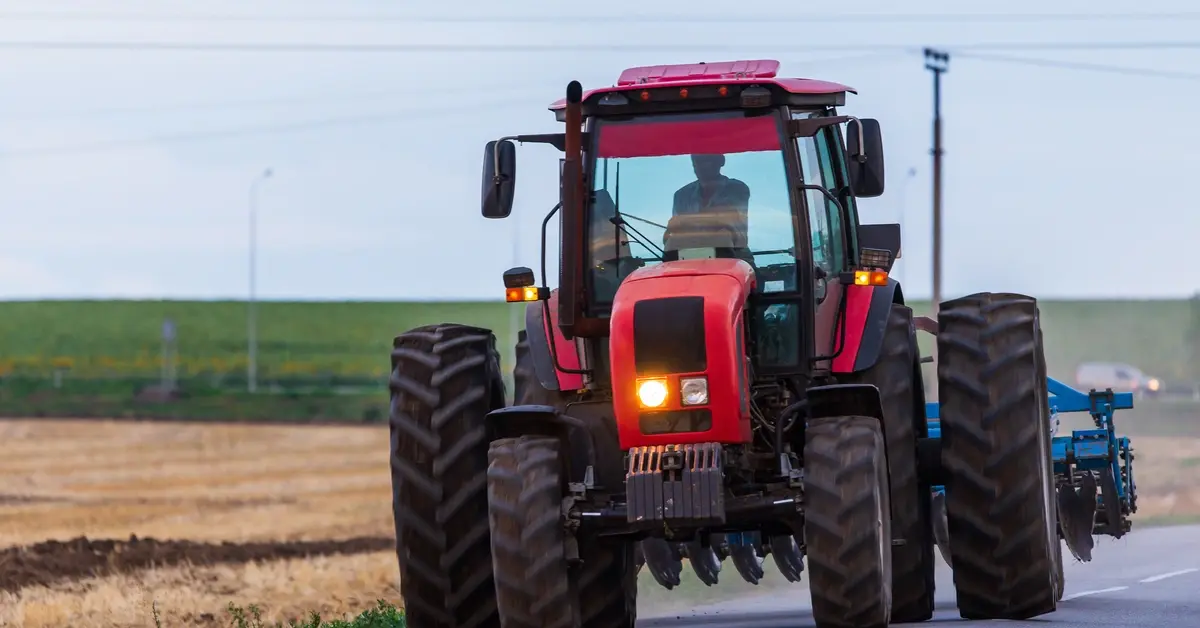
How fast are you actually closing in? Do you pass, or do you settle in and wait? Is there room to pass? The orange triangle on the back indicates that the vehicle was built to travel 25 mph or less, and during spring planting and fall harvest you’re likely to meet it on the way to work, school or town.
In Pennsylvania, the same emblem shows up on horse-drawn buggies, which carry their own risks at dusk and on narrow back roads. With this guide, our goal is to explain what this triangle sign means, what Pennsylvania law actually requires and how to get around farm equipment safely — as well as how an auto claim may be handled if something goes wrong.
The Speed Difference is Bigger Than It Feels
A car traveling 55 mph closes in on a tractor traveling 15 mph across roughly 300 to 400 feet in a matter of seconds. This difference in speed can turn what looks like plenty of distance into very little reaction time.
Your eyes register a tractor, combine, wagon or buggy well before your brain does the math on how fast you're catching up to it. A vehicle that appears "way up ahead" can be close enough that you need to be braking immediately, not after you've finished sizing up a passing opportunity.
The risk is especially high on rolling roads in central Pennsylvania and western Maryland, as well as around small towns where field entrances sit just past a hill, a bend or a tree line. In harvest season, it’s best to treat every crest and curve as a place something slow might be waiting. This is the same habit that helps with other rural hazards, from deer on rural roads to the visibility problems covered in Mutual Benefit Group's winter driving resources.
What Does the Orange Triangle on Farm Equipment Mean?
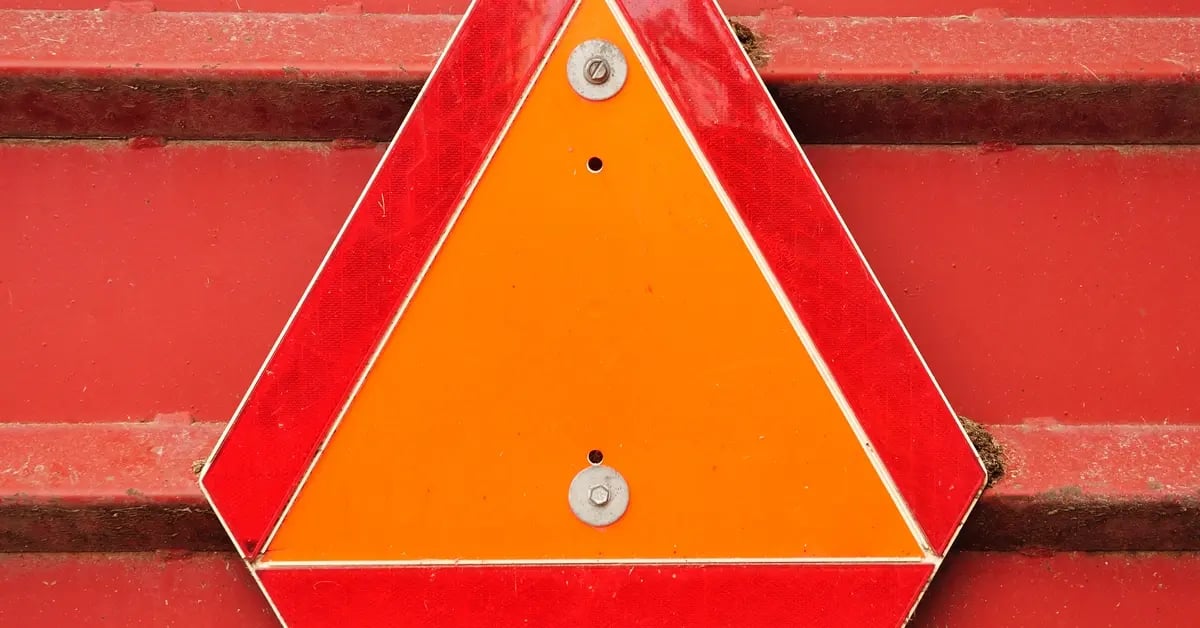
The orange-and-red reflective triangle is a slow-moving vehicle emblem. In Pennsylvania, it marks certain vehicles designed to operate at 25 mph or less when they're traveling on a highway.
For a driver, it means one thing: slow down as soon as you see it. What it doesn't mean is that the operator is pulling over for you, that passing is safe or that the vehicle is going to stay tidily inside its own lane.
The emblem appears on more than just farm tractors. Around Pennsylvania communities with Amish and Plain residents, this same emblem often means a horse-drawn buggy. On Maryland roads, you'll meet slow farm vehicles moving between fields, barns, markets and processing locations. Maryland's 2019 Rural Road Safety Study notes that farm vehicles and equipment must travel public roads to reach outlying fields and move products to market or processing facilities. It also indicates that Maryland has more than 12,000 farm operations across every county.
What Are Pennsylvania's Slow-Moving Vehicle Laws?
Pennsylvania law clearly defines when the emblem is required. Under 75 Pa.C.S. § 4529, it’s required on implements of husbandry, commercial implements of husbandry, special mobile equipment designed to operate at 25 mph or less and animal-drawn vehicles whenever they travel on a highway.
The law covers towed equipment too. If something is being towed and the towing vehicle's emblem isn't visible from behind, the towed equipment needs its own. Pennsylvania also bars displaying the emblem on anything traveling over 25 mph, which is worth noting: the triangle isn't a general-purpose caution sign.
| Vehicle or Situation | What Pennsylvania Law Says | What Drivers Should Take from It |
| Implements of husbandry and commercial implements of husbandry designed for 25 mph or less | Must display the slow-moving vehicle emblem when traveling on a highway. | Expect slow speed, wide equipment and possible turns into fields or driveways. |
| Special mobile equipment designed for 25 mph or less | Must display the emblem when traveling on a highway. | Don’t treat the emblem as farm-only. The speed warning is the point. |
| Animal-drawn vehicles | Must display the emblem when traveling on a highway. | Give buggies the same early slowdown you would give a tractor, with extra care around horses. |
| Towed equipment | Must display its own emblem unless the towing vehicle's emblem is visible from the rear. | Look beyond the tractor. A wagon or implement may block lights, mirrors or the emblem ahead of it. |
| Vehicles traveling over 25 mph | The emblem may not be displayed. | The triangle isn’t a decoration or general caution sign; it has a specific legal use. |
Can you drive a tractor on the road in Pennsylvania? Yes. Farm equipment can legally travel public roads when it's operated according to the rules that apply to it, and those rules depend on the equipment, the roadway and how the vehicle is marked, lighted and operated. If you're the one behind the wheel of the tractor, confirm current requirements with the proper state resources and your insurance professional.
Is it illegal to drive farm equipment on the road? Not automatically. Farm equipment on public roads is often necessary in order for farms to function. The question is whether the equipment and the operator meet the rules for that situation.
How old do you have to be? That depends on vehicle type, use, licensing and state law, and it shifts enough by situation that a rule of thumb won't always apply. Check state guidance, and talk with a local independent agent if the answer impacts coverage on a household, farm or business vehicle.
Why Buggies Deserve Their Own Attention in Pennsylvania
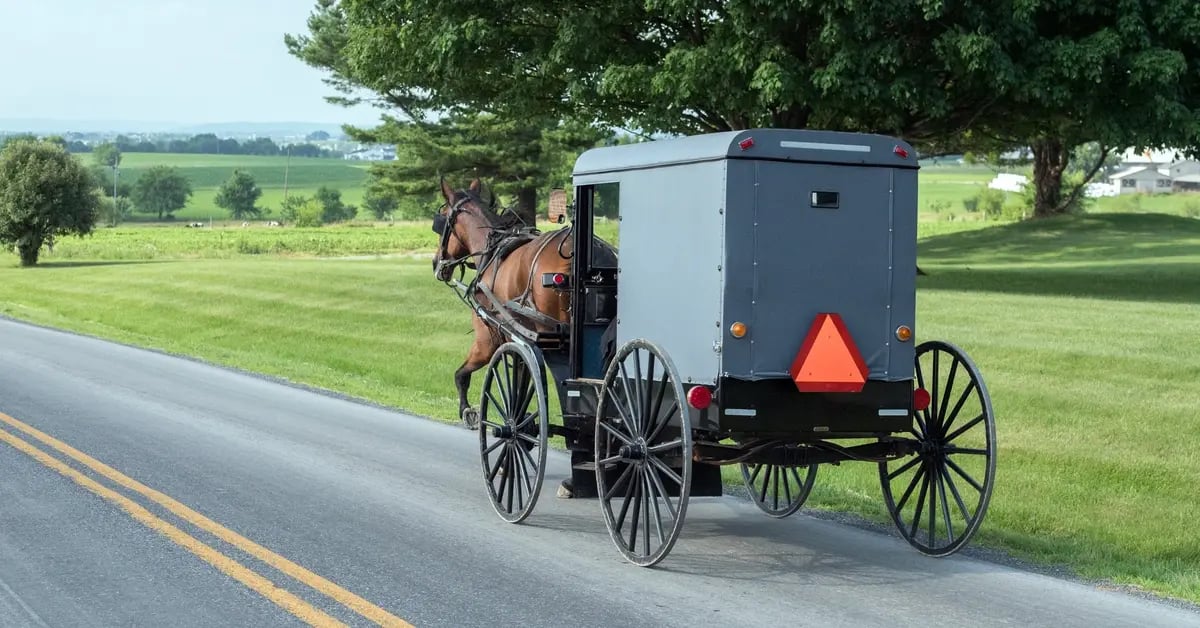
In parts of Pennsylvania, the orange triangle is just as likely to mean "horse-drawn buggy ahead" as "tractor ahead." Lancaster County is the best-known example, but you'll meet buggies in and around Mifflin, Huntingdon and neighboring counties, too. MBG is based in Huntingdon, so we’re very familiar with these situations and the scenarios that can ensue.
A buggy presents different risks than a tractor. There's not always an enclosed cab around the people inside. The horse pulling it can react to noise, air movement, headlights or a car passing too closely, and many buggy trips happen near dawn or dusk, when visibility can change quickly and drivers are tired or dealing with glare from a low sun.
A few general guidelines can help you navigate the road with buggies. Slow down early, and leave more room than feels necessary. Avoid revving your engine, honking or passing too closely. If there's a newer driver in your household learning rural roads, buggy encounters belong in the same conversation as teenage driver safety and what to do when something unexpected shows up past the top of a hill.
What Do I Do When I Come up Behind Farm Equipment on the Road?
Safe passing starts well before you pull into the other lane. Slow down, leave plenty of space and pay attention to the road, the equipment and the operator’s next move.
-
Slow immediately. Don't wait until you're close to start braking. The gap between your vehicle and the farm equipment disappears faster than you think it will.
-
Hang back. Leave enough space to see around the equipment when the road opens up, but not so close that you're pressuring the operator or cutting down on your own reaction time.
-
Watch for the wide turn. A tractor or other farm equipment often drifts right before swinging left into a field, lane or driveway.
-
Never pass on hills, curves, bridges, intersections or marked no-passing zones. If you can't see the whole passing path and the lane you're returning to, wait.
-
Don't assume the shoulder will hold. A loaded wagon or wide implement may need the lane, and soft shoulders can give way under heavy machinery.
-
When you do pass, pass slowly, allowing extra space. Blowing by creates air movement that can unsettle equipment, animals and the person operating them.
The key component here is patience when encountering and deciding whether to pass farm equipment — it can be the difference between being five minutes late and getting there alive.
How Does an Auto Claim Work After a Collision with Farm Equipment?
A crash involving farm equipment can be more complicated than a typical collision between two cars. The same basic questions apply, but determining what happened and who is responsible may be less straightforward.
-
Was the equipment legally on the road?
-
Was it properly marked?
-
Was someone passing where they shouldn't have been?
-
Did lights, reflectors, visibility, speed or lane position play a part?
Who is ultimately at fault if a car hits farm equipment? The answer depends on the facts. A driver who rear-ends a properly marked slow-moving vehicle may face a very different claim review than one who hits unmarked equipment after dark. Similarly, a passing crash may come down to whether the pass was legal in the first place and whether the equipment was turning, signaling or positioned lawfully.
Your own policy terms control what's covered, what deductible applies and how the claim gets handled. If you want a clearer picture of your coverage before a claim happens, MBG's Insurance 101 resources cover how your auto policy works, the difference between collision versus comprehensive coverage and how your deductible shapes a claim.
What to Do at the Scene if a Crash Happens
If you can do so safely, move away from traffic and other immediate hazards. Then, check for injuries, call emergency services if they're needed and follow law enforcement instructions. Rural roads often have almost no shoulder, so be careful about where you stand relative to traffic, equipment, animals and anything that may have spilled.
As is recommended at any crash, document the details: photos of the vehicles, the roadway, signs, field entrances, lighting, weather and the slow-moving vehicle emblem if there is one. Exchange information, and resist the urge to speculate about fault at the scene. Finally, once everyone is safe, contact your insurance company or agent to get the claim started.
Review Your Auto Coverage Before the Next Planting or Harvest Season
Sharing the road with farm equipment is a reality of driving in Pennsylvania and Maryland. You can go weeks without meeting a tractor, combine, wagon or buggy and then run into four of them on a single trip in October. The safest approach is straightforward: slow down early, hang back, pass only when the road and the operator's next move are both clear and treat that orange triangle as a warning to adjust your speed and give the equipment room.
Before the next busy season, it's worth sitting down with someone local and going through your auto coverage. An independent agent can walk you through collision coverage, liability limits, uninsured and underinsured motorist choices and deductibles, as well as whatever else is specific to your household. If you want a sense of why that local relationship is worth having, read MBG's guide on why to talk with a local independent agent, or look through the available personal auto coverage options.